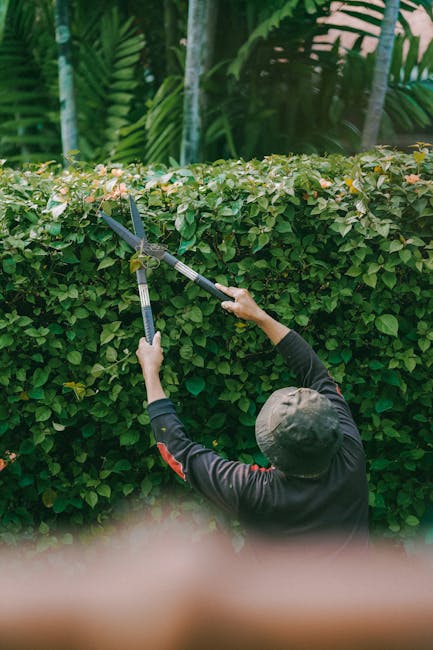
Permits and fines for hedge removal in Islington and Haringey
If you're planning hedge removal in Islington or Haringey, the question is rarely just "Can I do it?" It's more often "Do I need permission, and what happens if I get it wrong?" That's where things can get messy. Permits and fines for hedge removal in Islington and Haringey matter because a simple garden job can cross into planning, boundary, wildlife, highway, or neighbour-related issues faster than most people expect.
In this guide, we'll walk through the practical side of hedge removal: when consent may be needed, why councils care, how penalties can arise, and what a sensible homeowner or landlord should check before cutting anything down. We'll also cover the less glamorous but very real bits - paperwork, timing, evidence, and what to do if a hedge is already causing trouble. Not exciting, perhaps, but useful. Very useful.
To keep things grounded, this article focuses on the sort of situations that come up in real London gardens: tight frontages, party boundaries, wildlife nesting seasons, conservation-style concerns, and the occasional "the hedge got out of hand" moment. Let's face it, hedges have a habit of becoming bigger projects than you thought on a wet Tuesday afternoon.
Practical note: council rules can differ by exact location and the details of the hedge. Treat this as a guide, not a substitute for checking the relevant local position before work starts.
Table of Contents
- Why Permits and fines for hedge removal in Islington and Haringey Matters
- How Permits and fines for hedge removal in Islington and Haringey Works
- Key Benefits and Practical Advantages
- Who This Is For and When It Makes Sense
- Step-by-Step Guidance
- Expert Tips for Better Results
- Common Mistakes to Avoid
- Tools, Resources and Recommendations
- Law, Compliance, Standards, or Best Practice
- Options, Methods, or Comparison Table
- Case Study or Real-World Example
- Practical Checklist
- Conclusion
- Frequently Asked Questions
Why Permits and fines for hedge removal in Islington and Haringey Matters
Hedge removal sounds straightforward until you realise a hedge can be part privacy screen, part boundary marker, part wildlife habitat, and sometimes part planning issue. In Islington and Haringey, where properties are often close together and front gardens can be compact, the impact of removing a hedge is felt quickly - by neighbours, passers-by, and, sometimes, the council.
Why does that matter? Because the wrong approach can lead to complaints, enforcement attention, or a bill that is a lot less pleasant than the original garden project. Fines are not always about the act of cutting a hedge itself; they can arise if removal happens without considering a protected status, a planning restriction, a boundary dispute, or an associated tree or wildlife issue.
There's also the simple reality of timing. A hedge may seem overgrown in late spring, but if birds are nesting, or if the hedge contributes to screening in a sensitive location, removal may be more complicated than it appears. People often underestimate this. One neighbour's "tidy-up" can become another neighbour's "you've completely changed the feel of the street."
Key takeaway: hedge removal is not just landscaping. It can touch planning, property rights, ecology, and local enforcement all at once.
If there's one thing worth remembering, it's this: a few minutes of checking can save a lot of back-and-forth later. The council rarely gets excited about a well-planned job. It does notice the messy ones.
If your garden works alongside other services such as regular garden maintenance or hedge trimming, it's usually easier to manage growth and reduce the risk of a drastic removal becoming necessary in the first place. For larger clearances, the right approach often starts with a proper garden clearance plan rather than a quick cut-and-see.
How Permits and fines for hedge removal in Islington and Haringey Works
There is no single "hedge removal permit" that applies in every case. That's the first thing to get straight. In practice, whether you need permission depends on what the hedge is doing, where it sits, and whether any special protections or restrictions apply.
Here is how the process usually works in plain English:
- Identify the hedge correctly. Is it just a decorative boundary hedge, or is it mixed with trees, adjacent to a highway, or part of a conservation-sensitive setting?
- Check whether planning control could apply. Some gardens, boundary treatments, and frontages in London fall into protected planning contexts, even if the hedge itself looks ordinary.
- Consider ownership and boundary issues. If the hedge sits on or near a shared line, both sides of the boundary may matter.
- Look for ecological sensitivity. Removal during nesting season, or removal that affects wildlife habitat, may create problems even if there is no formal permit.
- Document the condition. Photos, dates, and notes can be helpful if anyone later questions what was removed and why.
- Use the right contractor or method. Careful removal is different from brute-force stripping, and the latter can create more issues than it solves.
In many gardens, the issue is not the hedge alone but the wider setting. A hedge with mature stems may conceal tree trunks. A front hedge near the pavement may affect visibility or access. A rear boundary hedge may be part of a neighbourly compromise that has lasted years. The details matter.
Fines, where they arise, usually come from breach of a local control, nuisance, or enforcement issue rather than from the simple fact of changing a garden. That distinction is easy to miss. It's why the safest route is to slow down and check before work begins.
When people ask whether they can simply cut a hedge down because it belongs to them, the answer is: maybe, but ownership is only one piece of the puzzle. Local restrictions, shared boundaries, and associated rules can still apply.
Key Benefits and Practical Advantages
Getting the permit-and-fine question right does more than keep you out of trouble. It makes the whole project smoother and, frankly, less stressful.
- Fewer disputes: neighbours are less likely to object when the reasoning is clear and the process is sensible.
- Lower enforcement risk: checking first helps reduce the chance of complaints or follow-up letters.
- Better project planning: if consent or notice is needed, you can schedule work properly instead of rushing.
- Safer outcomes: proper assessment reduces the chance of damaging nearby walls, fencing, roots, or hidden tree material.
- Cleaner finish: planned removal usually looks better than a sudden hack job. To be fair, the garden can tell the difference.
There's also a long-term benefit. A hedge removed for the right reason, in the right way, can open up light, improve access, and make a plot easier to maintain. That may sound obvious, but people often only think about what they are losing. They should also think about what becomes easier afterwards - mowing, edging, replanting, or redesigning the space.
If the wider goal is a more manageable garden, it may help to review other services too, such as lawn mowing for the open space you create, or even broader landscaping if the hedge removal is part of a bigger redesign. In some cases, a careful replacement scheme is better than removal alone.
Who This Is For and When It Makes Sense
This topic matters to more people than you might think. It is not just for homeowners with a neat front garden and a box hedge. It comes up for landlords, property managers, tenants, builders, and anyone dealing with boundary vegetation in a dense part of London.
You should pay close attention if any of these apply:
- You live in a conservation-sensitive area or a property with planning conditions.
- Your hedge borders a pavement, road, or public-facing frontage.
- The hedge appears to contain or shelter tree stems.
- There is disagreement with a neighbour about boundary position or privacy.
- You are removing a hedge as part of a larger clearance or renovation project.
- You have noticed wildlife activity, especially nesting birds.
Sometimes the sensible move is not removal, but reduction. A hedge that feels like a problem in January might only need reshaping in June. Other times, removal is the correct choice because the hedge is diseased, unstable, obstructive, or simply no longer suited to the space. The point is to know which case you're in before tools come out.
For property owners who are juggling several garden jobs at once, combining hedge work with services overview planning can help set priorities. If the hedge is only one part of a much larger tidy-up, a coordinated approach can save time and duplication.
Step-by-Step Guidance
Here's a practical way to handle hedge removal without stumbling into avoidable problems.
1. Inspect the hedge properly
Look at the hedge from both sides if you can. Check whether it appears to be purely ornamental or whether it may hide trunks, mixed planting, or deeper root structure. Look for signs of nesting birds, recent pruning, or dead sections. A quick glance from the window is not enough. Walk it, if the layout allows.
2. Identify any planning or location sensitivities
Ask whether the hedge is in a place where local planning rules may matter. Front gardens, street-facing boundaries, and properties in protected settings deserve extra caution. If you are unsure, treat uncertainty as a sign to pause rather than push on. That's not overcautious; it's sensible.
3. Check boundary ownership and neighbour expectations
If the hedge is shared, close to a boundary, or has been maintained informally for years, a neighbour conversation can prevent unnecessary fallout. A five-minute discussion can avoid a five-week argument. More than one, honestly.
4. Review wildlife and timing
Before removing anything, check for wildlife activity. If there is clear evidence of birds nesting, work should be delayed. Even where no formal permit is required, ecological good practice still matters. That is especially true in residential streets where hedges can become seasonal habitats without anyone really noticing until the birds start chattering away at dawn.
5. Decide whether full removal is actually needed
Could the hedge be reduced, reshaped, or partly replaced instead? Sometimes the cheapest and least risky route is not complete removal. A measured cut, followed by ongoing maintenance, can achieve most of the same benefits with far fewer complications.
6. Keep records
Take before photos, note the date, and keep any correspondence. If anyone asks later why the hedge was removed, a small paper trail can be surprisingly helpful. It doesn't need to be elaborate. Just enough to show you acted responsibly.
7. Use a careful removal plan
If the hedge is mature, overgrown, or mixed with woody stems, removal should be done with the right tools and sequence. Start by reducing height and volume, then assess the base and root area. Rushing to pull everything out in one go can damage surrounding surfaces. And then you've got a second job on your hands.
If you want support from a professional team, it can help to review their wider approach through pages such as insurance and safety and health and safety policy. That gives you a sense of whether they treat access, waste, and site safety as seriously as the visible cutting work.
Expert Tips for Better Results
Here are the practical details that often separate a smooth job from a frustrating one.
- Start with the least disruptive option. If trimming can solve the problem, do that first. Full removal should be a considered choice, not the default reaction.
- Photograph the hedge before any work. This helps if the garden changes hands, the neighbour queries the work, or you need to explain why the hedge had to go.
- Check for hidden tree elements. A hedge may contain thicker, tree-like growth that changes the compliance picture entirely.
- Think about the aftermath. Once the hedge is gone, what replaces it? Fence repair, soil conditioning, planting, privacy screening, or a new layout may be needed.
- Schedule around weather and access. Wet ground makes removal messier. Tight access means more care is needed to avoid damage and wasted effort.
- Choose a contractor who understands local constraints. A local team used to London gardens is more likely to spot the awkward bits before they become problems.
One small but useful habit: ask, "What could be hiding inside this hedge?" That sounds oddly cautious, maybe even a bit paranoid. But in the real world, hedges often hide old posts, wires, volunteer saplings, or a tree stem someone forgot about years ago. Best to know before somebody's saw meets something it shouldn't.
If hedge removal is part of a broader garden refresh, services such as landscape gardening can help you think beyond a single task and towards the overall shape of the space. The best gardens usually work as systems, not isolated jobs.
Common Mistakes to Avoid
Most trouble comes from a few predictable mistakes. Easy to make, annoying to fix.
- Assuming all hedges are unregulated. They are not. The setting matters.
- Removing before checking nesting or wildlife use. This can create avoidable conflict and distress.
- Ignoring neighbour concerns. Even if you are legally in the clear, a bad conversation can sour the whole project.
- Not checking for hidden tree work issues. Mixed vegetation can change the job from hedge removal into something more complex.
- Skipping records. A missing photo or note is a small thing until you need it.
- Using the wrong contractor for the scale of work. A small domestic trim team may be fine for tidy reduction, but not every full clearance is the same job.
Another common one: people overestimate how much privacy they will lose and underestimate how much light they will gain. Then the garden feels different in a good way, and they wonder why they waited so long. Not always, but often enough.
Tools, Resources and Recommendations
You do not need a huge toolkit to approach hedge removal sensibly. What you do need is a proper process and the right checks.
| Need | Useful approach | Why it helps |
|---|---|---|
| Initial assessment | Walk around the hedge and inspect both sides | Helps spot shared boundaries, nesting signs, or hidden stems |
| Documentation | Take photos and short notes | Creates a record of the hedge's condition before work |
| Professional support | Use a contractor familiar with local garden work | Reduces the chance of missed compliance issues |
| Waste handling | Plan for green waste and stump material | Keeps the job tidy and avoids leftover debris |
| Replacement planning | Consider replanting or screening options | Prevents the area from looking exposed after removal |
For larger jobs, pairing hedge work with tree lopping and removal can be sensible if there are also problematic trees, but only where the job genuinely calls for both. Don't bundle tasks just because they sound similar. A hedge and a tree are not the same creature, not by a long way.
It can also be useful to think about waste handling and sustainability from the start. If you are dealing with a lot of cut material, the way it is collected, separated, and reused or disposed of will affect how tidy and efficient the project feels. The best jobs finish cleanly, not with a heap of branches staring back at you from the corner.
Law, Compliance, Standards, or Best Practice
In legal and compliance terms, hedge removal in Islington and Haringey is usually about a combination of local planning controls, property boundaries, nuisance risk, and environmental care. The exact position depends on the site, so cautious wording matters here. There is no single universal answer that fits every garden.
As a general rule, the sensible best practice is:
- Check for local restrictions before work begins.
- Confirm who owns the hedge or boundary feature.
- Avoid work during active nesting if wildlife is present.
- Keep the work proportionate to the issue.
- Use insured, safety-conscious contractors for larger or riskier removals.
Where a hedge is part of a protected frontage, boundary arrangement, or wider planning-sensitive site, you should be particularly careful. In those cases, the risk is less about the physical act of removal and more about doing it without the right context. That is the bit people miss.
Professional standards also matter. A reputable contractor should be comfortable discussing access, waste removal, safety, and how they manage the site. If a provider seems vague about those basics, that's a bit of a red flag. Not always, but enough to slow down and ask more questions.
For general trust-building and service transparency, it can help to review a company's about us information and terms and conditions. Those pages won't answer every legal question, of course, but they can show whether the company takes responsibility seriously and explains its process clearly.
Options, Methods, or Comparison Table
Depending on the hedge and the reason for removal, you generally have a few practical options. Choosing the right one can reduce hassle and, sometimes, avoid the need for more formal steps.
| Option | Best for | Pros | Trade-offs |
|---|---|---|---|
| Light trimming | Hedges that are just overgrown | Least disruptive, preserves privacy | May not solve a structural problem |
| Selective reduction | Hedges that need reshaping | Improves access and appearance | Requires judgement and ongoing care |
| Full removal | Dead, unsafe, or unsuitable hedges | Creates space for redesign | May trigger checks, notice, or neighbour issues |
| Replacement planting | Properties needing privacy without the same hedge | Future-proofing and visual softness | Needs planning and maintenance |
In many London gardens, selective reduction is the sweet spot. It often solves the immediate issue without creating an empty, stark boundary line. Full removal makes sense when the hedge is failing, diseased, blocking use, or simply no longer fit for purpose. But if you are unsure, start smaller.
That said, sometimes removal is the honest answer. A dead hedge is still a dead hedge, even if it used to look fine five years ago. No point pretending otherwise.
Case Study or Real-World Example
A typical example in Islington or Haringey might look like this: a homeowner has a tall boundary hedge that has slowly become too broad for the side return. It blocks light, catches litter, and makes maintenance awkward. The obvious thought is to remove it completely.
Before doing that, they inspect the hedge and notice there are older, woody stems near the base, plus signs of bird activity in spring. The hedge also sits near the front edge of the property, visible from the street. Rather than cutting immediately, they pause, document the hedge, and ask whether a phased reduction would be better. They also speak to the neighbour, because the hedge is close enough to the boundary to affect both gardens.
The result is not dramatic, but it is better: the hedge is reduced in stages, the nesting issue is avoided, the frontage looks smarter, and the final decision about removal can be made later with more confidence. No fine, no dispute, no awkward follow-up. Boring in the best possible way.
That sort of measured approach is usually what works best. It protects the project, protects relationships, and makes the end result feel deliberate rather than accidental.
Practical Checklist
Use this before any hedge removal work begins:
- Have you confirmed whether the hedge is on or near a boundary?
- Have you checked for planning sensitivity or local restrictions?
- Have you looked for nesting birds or wildlife use?
- Do you know whether the hedge contains tree stems or mixed planting?
- Have you taken before photos?
- Have you spoken to neighbours where relevant?
- Do you have a plan for waste, stumps, and surface repair?
- Is full removal necessary, or would trimming be enough?
- Have you chosen an insured, safety-conscious contractor if the job is larger?
- Do you know what the garden will look like afterwards?
If you can tick most of those off, you are in a far better position than the average rushed weekend job. And yes, the weekend job is tempting. We've all looked at a hedge and thought, "I'll just sort that now." Famous last words, sometimes.
Conclusion
Permits and fines for hedge removal in Islington and Haringey are really about one thing: taking the time to understand the context before changing the garden. A hedge is not always just a hedge. It may be boundary-related, wildlife-sensitive, visually important, or tied to local restrictions that only become obvious once you start asking the right questions.
If you remember nothing else, remember this: check first, cut second. That simple habit can save money, reduce stress, and keep neighbours on side. It also gives you a cleaner, more confident result - the kind that feels planned, not patched together.
For many properties, the best outcome is a balanced one: maybe a light reduction now, a full removal only if it truly earns its place, and a longer-term garden plan that suits the home as a whole. That's the calm, sensible route. Usually the best one, too.
Get a free quote today and see how much you can save.
If you are weighing up whether to trim, remove, or redesign a hedge in your garden, the safest next step is to speak with a local professional who understands the practical and compliance side as well as the gardening side. That little bit of care up front can make the whole project feel much easier, and honestly, a lot less stressful.
Frequently Asked Questions
Do I always need a permit to remove a hedge in Islington or Haringey?
No, not always. Whether permission is needed depends on the hedge's location, any planning sensitivity, boundary issues, and whether it is linked to trees or protected settings. Some jobs can proceed without formal consent, but you should not assume that from the start.
Can I be fined just for cutting down my own hedge?
Potentially, yes, if the removal breaches local rules, causes an enforcement issue, or ignores a protected context. The fine risk usually comes from the circumstances around the work, not the hedge itself.
What is the biggest mistake people make with hedge removal?
Skipping the checks. People often rush into removal without confirming ownership, planning restrictions, or wildlife considerations. That is the point where avoidable problems start.
Does nesting season matter when removing a hedge?
Yes, it can matter a great deal. If birds are nesting or clearly using the hedge as habitat, removal should usually be delayed. It is one of those things that seems minor until it is not.
What if the hedge is on a boundary line with my neighbour?
Then you should be especially careful. Boundary-related hedges can raise ownership and consent questions, so a quick conversation and a proper check are wise before any work starts.
How do I know if my hedge is actually part tree and part hedge?
Look for thicker stems, woody trunks, or mixed growth at the base. If you are unsure, assume it may be more complex than a simple hedge until it is properly inspected.
Is trimming safer than full removal?
Usually, yes. Trimming or reduction is often less disruptive and less likely to trigger disputes or compliance issues. Full removal should be reserved for cases where it is genuinely needed.
Can hedge removal affect privacy or light in my garden?
Absolutely. Removing a hedge can transform both the feel and function of a space. You may gain light, but you may also lose screening. It is worth thinking about the end result, not just the immediate problem.
Should I keep records of hedge removal work?
Yes. Photos, dates, and short notes can be very helpful if questions arise later from a neighbour, contractor, or council officer. A small record can save a lot of back-and-forth.
What if I need more garden work after removing the hedge?
Then it makes sense to plan the next stage early. You might need replanting, fencing, lawn repair, or a broader redesign. Many people find it easier to bundle the wider garden plan once the hedge is gone.
How do I choose the right contractor for hedge removal?
Look for clear communication, sensible safety practices, and experience with local garden conditions. If a contractor can explain access, waste, and risk in plain English, that is a good sign. If they sound vague, keep asking.
What should I do if I'm still unsure whether removal is allowed?
Pause and get a proper assessment before work begins. Uncertainty is a signal to slow down, not speed up. In practice, that is often what avoids fines, complaints, and do-overs.